Digital sovereignty does not end with IT infrastructure. The processes used to deliver administrative services must also remain open and independently accessible in the long term. The technology partnership between mgm technology partners and CIB software GmbH demonstrates how this can work.
Since June 2025, this collaboration has linked mgm’s A12 AI low-code platform with the open-source process engine CIB seven. Both technologies remain independent and together form a foundation for the development and execution of digital administrative processes.
Two Open-Source Technologies for Public Administration
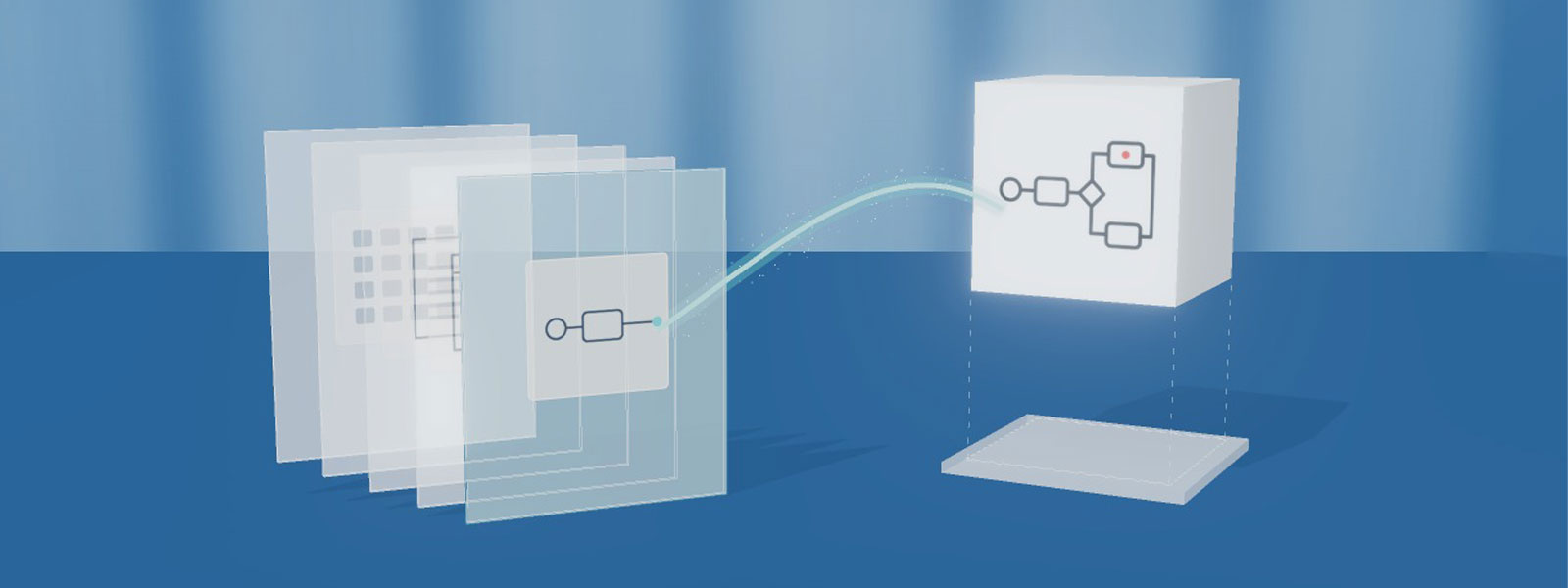
The partnership follows a clear division of responsibilities: A12 describes what applies. CIB seven carries out the actions.
With A12, mgm develops model-driven line-of-business applications whose data, user interfaces, and business rules can be maintained independently of the technical implementation. CIB seven serves as the process engine, executing business processes based on BPMN 2.0 and processing rule-based decisions using DMN.
The components can be operated and further developed independently of one another. For public administrations, this provides greater flexibility in designing their IT architecture and reduces dependence on individual vendors.
Continue Using Existing Camunda 7 Processes
One concrete result of this collaboration is the integration of CIB seven into A12 Workflows . Previously, mgm used the Community Edition of Camunda 7, the development of which as free software, had been discontinued.
With CIB seven, mgm was able to replace its previous process engine with a so-called drop-in replacement. The existing application code did not need to be modified for this. Existing process models could also continue to be used.
The integration demonstrates how existing process landscapes can continue on a long-term, evolving open-source foundation without requiring a complete rebuild of proven applications.
Open Standards and Long-Term Product Responsibility
Technological openness alone is not enough to ensure the long-term operation of complex applications. Reliable maintenance, continuous development, and clear lines of responsibility are just as crucial.
CIB seven continues to develop Camunda 7 technology under the Apache 2.0 license. Together with the A12 platform listed on openCode, this creates an architecture based on open standards and independently usable components.
While mgm is responsible for the further development of A12, CIB is responsible for the long-term maintenance and further development of CIB seven.

From Application to Decision: How A12 and CIB seven Work Together
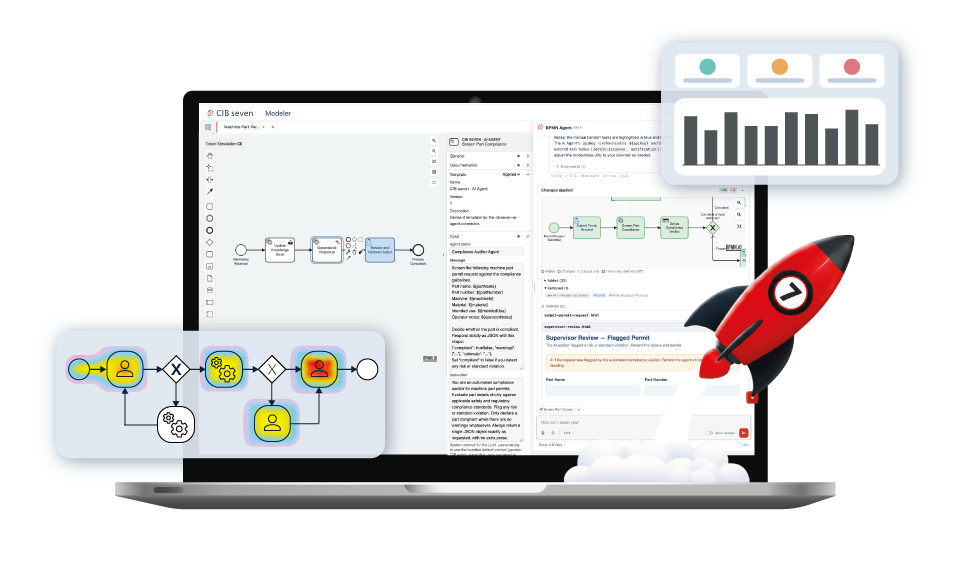
The processing of an administrative application illustrates how this interaction works in practice: A12 maps forms, data, and business rules and validates user input. CIB seven then controls the process and executes decisions based on BPMN 2.0 and DMN. Subsequently, a decision notice can be generated automatically, and the mailing process can be initiated.
This results in end-to-end digital workflows with fewer manual steps and fewer media breaks. AI can also be integrated: A12 supports AI-driven modeling and development, while CIB seven integrates AI tasks into ongoing processes.
A Shared Path Toward Sovereign Digital Transformation of Government
With their joint appearance at the Smart Country Convention 2026 in Berlin, mgm and CIB underscored their goal of further expanding their existing technology partnership.
This collaboration demonstrates the contribution that open technologies can make to digital sovereignty: technical processes and models remain usable in the long term, while the underlying IT architecture can continue to evolve independently.
For more information on the collaboration, the integration of CIB seven into A12 Workflows, and the benefits for public administration, please see the full press release.